
Ask most parents what abacus training looks like and they will picture a wooden frame with coloured beads, a classroom in East Asia, and rows of children clicking beads in perfect unison. That image is decades out of date. Today, the most effective abacus learning happens in a completely different setting: a child at home, a tutor on screen, a shared digital whiteboard, and a session built entirely around that one child’s pace and learning style. Live online sessions primary education has transformed how abacus is taught to children as young as 3 and as old as 12, giving primary school pupils across the country access to structured, expert-led abacus training without leaving their living room.
According to a 2023 report from the National Centre for Excellence in the Teaching of Mathematics (NCETM), children who build strong mental arithmetic foundations in Key Stage 1 and Key Stage 2 consistently outperform their peers in Year 6 SATs and secondary school Maths. The abacus is one of the most reliable tools for building those foundations, and the shift to live online delivery has made it more accessible than ever before.
This guide explains exactly what live online sessions primary education for abacus looks like in practice, how a session is structured, what children learn at each stage, and what parents should look for when choosing a tutor.
What Are Live Online Abacus Sessions and Who Are They For?
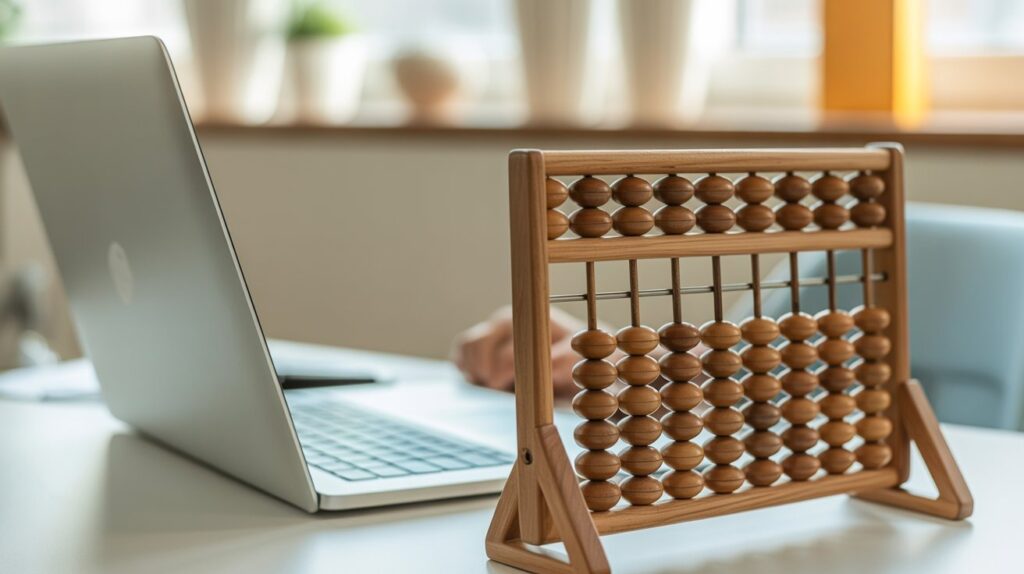
Live abacus classes for kids are real-time, interactive tutoring sessions delivered through video platforms where a qualified abacus instructor teaches a child one-to-one or in a very small group. The keyword here is live. Unlike pre-recorded video lessons or app-based abacus programmes, a live session means a tutor is present throughout, watching the child’s technique, responding to errors in real time, and adjusting the difficulty of exercises minute by minute based on how the child is performing.
These sessions are designed for children between 3 and 12 years old, covering the full span of early years through to the end of primary school. A 4-year-old working on number recognition and bead counting receives a very different session to a 10-year-old practising 5-digit mental multiplication. Live abacus classes for kids are structured in progressive levels so each child moves through a clear programme at their own pace, building new skills only when the previous ones are genuinely secure.
For primary school children preparing for Year 6 SATs, developing strong abacus-based mental arithmetic habits is particularly valuable. Numerical reasoning, mental calculation, and problem-solving all feature in SATs assessments, and children who can perform these calculations quickly and confidently have a measurable advantage.
How a Live Online Abacus Session Actually Works
Online abacus training delivered through live sessions follows a clear and consistent structure that balances direct instruction, guided practice, and independent challenge. Understanding that structure helps parents know what to expect and how to prepare their child for each session.
A typical 45-minute session for a primary school child is divided into four distinct phases. The tutor moves through them fluidly, adjusting the time given to each based on how the child is responding on the day.
The Four Phases of a Structured Abacus Session
• Warm-up and review (5 to 8 minutes): The session opens with a quick recap of the previous lesson. The tutor asks the child to demonstrate two or three skills from the last session before introducing anything new. This review phase activates memory and builds on prior learning rather than treating each session as a fresh start.
• New technique introduction (10 to 12 minutes): The tutor introduces one new concept or skill using the shared digital whiteboard. The child follows along on their physical or virtual abacus, replicating the bead movements shown on screen. The tutor demonstrates slowly first, then asks the child to replicate, watching for any technical errors.
• Guided practice with real-time feedback (15 to 20 minutes): The child works through a series of exercises while the tutor observes. Errors are corrected immediately, not at the end of the exercise. This is where the live format provides its biggest advantage over any pre-recorded programme: wrong technique is never practised repeatedly.
• Timed challenge and close (5 to 8 minutes): The session ends with a short timed challenge using skills from the current level. This builds the speed and accuracy that define genuine abacus proficiency, and the visible countdown adds a productive element of focus that children tend to enjoy.
This structure is consistent with the principles of effective instruction outlined in Ofsted’s 2023 review of mathematics teaching in primary schools, which emphasised the importance of retrieval, immediate feedback, and deliberate practice in building numerical fluency.
What Children Learn Through Online Abacus Training
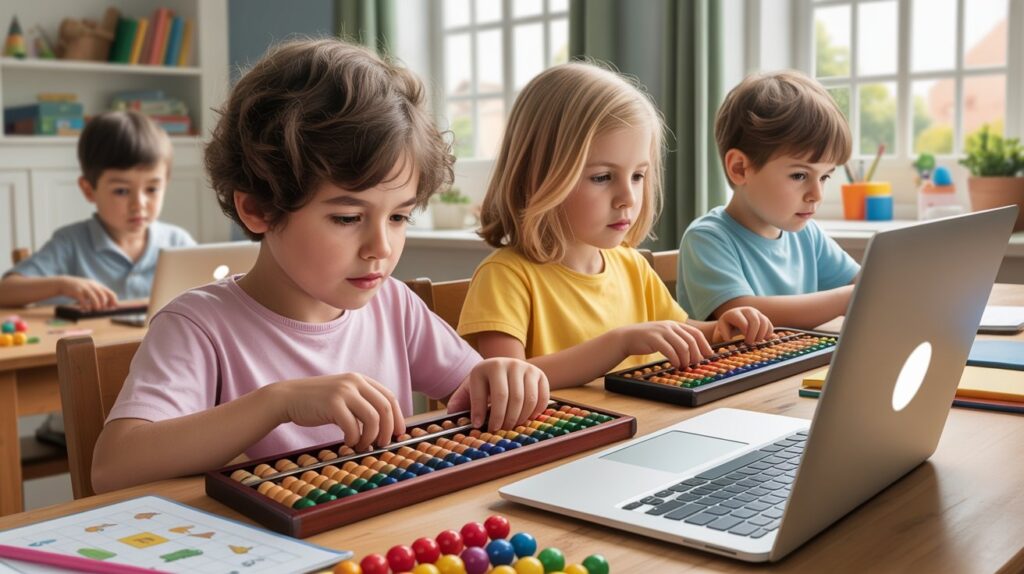
Online abacus training covers a much wider range of skills than most parents initially expect. It is not just about calculating answers quickly, though speed and accuracy are certainly part of it. The deeper value of abacus training lies in the cognitive habits it builds over time.
Children who go through a structured abacus programme develop the following skills progressively:
• Number sense and place value: Manipulating beads to represent numbers builds an intuitive understanding of how numbers are composed, which directly supports KS1 and KS2 curriculum objectives.
• Mental calculation speed: As children progress through the levels, they develop the ability to visualise an abacus mentally and perform calculations in their heads without any physical tool.
• Working memory and concentration: Holding bead positions in the mind while continuing to calculate is a significant working memory exercise, and research from the University of Chicago has linked structured abacus training to measurable improvements in working memory performance.
• Spatial reasoning: The physical and visual nature of bead manipulation develops spatial awareness that underpins geometry, measurement, and shape work in primary school Maths.
• Confidence with numbers: Children who can calculate quickly stop feeling anxious about Maths problems. This confidence shift is one of the most consistently reported outcomes by parents whose children complete abacus programmes.
How Children in Manchester and Houston Are Learning Abacus Faster Through Live Online Sessions
Abacus for primary school students has become increasingly sought after in cities like Manchester and Houston, where parents are looking for structured enrichment programmes that give children a measurable academic advantage. In Manchester, where competition for places at selective secondary schools is significant, many Year 4 and Year 5 parents are beginning abacus training as part of a broader preparation strategy that also includes verbal and non-verbal reasoning practice.
Aisha Rahman, a Year 3 student at St. Margaret’s C of E Primary School in Manchester, began her abacus for primary school students programme through live online sessions in September 2024. Her tutor built a structured 16-week plan that moved her from basic single-digit addition on the abacus through to two-digit subtraction by January 2025. Her mother noted that Aisha’s confidence in her Year 3 Maths assessments improved noticeably after just 8 weeks, with her teacher commenting independently that her mental arithmetic speed had increased.
In Houston, where gifted and talented school entrance testing places a premium on numerical fluency, families are using online abacus sessions as an efficient preparation route. A child who can mentally add and subtract 4-digit numbers at speed holds a significant advantage in timed numerical reasoning tests that standard school Maths lessons alone do not develop.
Why Personalized Online Tutoring for 3 to 12 Year Olds Makes the Biggest Difference
The single most important factor in how quickly a child progresses through abacus levels is how well the sessions are tailored to that specific child. Personalized online tutoring for 3-12 year olds means something very specific: the level of challenge, the pace of progression, the way techniques are explained, and the amount of time spent on revision versus new content are all adjusted session by session based on how that one child is performing.
A 5-year-old who has just started learning to count and a 10-year-old who already understands multiplication need entirely different starting points, session lengths, and teaching approaches. Personalized online tutoring for 3-12 year olds begins with a diagnostic session that identifies where the child currently is and builds their programme from that point exactly, rather than starting everyone at Level 1 regardless of their existing knowledge.
The Education Endowment Foundation (EEF, 2024) found that one-to-one tuition adds an average of five additional months of academic progress compared to standard class-based instruction. For young children working through a progressive skill-based programme like an abacus, that additional progress is highly visible: children advance through levels faster, retain skills between sessions, and show greater transfer of their mental arithmetic ability into school Maths work.
You can read more about how personalized attention accelerates learning in our blog on how one-on-one online tuition helps children learn abacus faster, which covers the specific techniques tutors use to match their teaching approach to each child’s learning style.
What Makes the Live Format Better Than Apps or Pre-Recorded Lessons
Live online sessions primary education for abacus outperform app-based or video programmes in several important ways. The most significant is real-time error correction. When a child makes a technical mistake on an abacus, that mistake needs to be caught and corrected immediately. A child who practises an incorrect bead movement 50 times before it is corrected has built a habit that takes considerably more time to undo than if it had been caught at the first repetition.
Apps cannot see a child’s technique. Pre-recorded videos cannot respond to a particular child’s confusion at a specific moment. A live tutor does both, which is why the progression rate in well-delivered one-to-one live sessions is consistently faster than in self-directed digital programmes, regardless of how sophisticated those programmes are.
Interactive tools like shared digital abacuses, screen annotation, and visible countdown timers make live sessions genuinely engaging for primary-age children. Younger learners in particular respond well to the real-time interaction of a live session because it replicates the social dynamic of face-to-face learning, which is what their developmental stage naturally craves.
What to Look for When Choosing an Online Abacus Tutor for Your Child
With more families turning to online abacus tuition, the number of tutors and platforms offering these sessions has grown considerably. Not all of them deliver the same quality. Here are the key qualities to look for when choosing a tutor for your primary school child:
• Formal abacus instructor certification: A qualified abacus tutor should hold a recognised certification from a structured abacus methodology programme. General Maths teaching qualifications alone are not sufficient.
• Experience with the relevant age group: Teaching abacus to a 4-year-old and teaching it to a 10-year-old require very different approaches. Check that the tutor has specific experience with your child’s age group and stage.
• Clear level-based progression structure: A good tutor can explain exactly which level your child is working at, what the criteria are for advancing to the next level, and what a realistic timeline looks like from the child’s current starting point.
• Alignment with the UK primary curriculum: For children in KS1 and KS2, the tutor should understand how abacus skills connect to the National Curriculum Maths objectives and SATs preparation, so that sessions reinforce rather than duplicate school learning.
• Written session summaries for parents: After every session, parents should receive a brief note covering what was practised, the child’s accuracy and speed scores on timed exercises, and the focus for the next session.
• A free diagnostic assessment before any commitment: Any confident and experienced abacus tutor will offer an initial assessment session to establish the child’s starting level before recommending a programme.
For children also working on logical reasoning alongside Maths, our Logical Reasoning tutoring courses offer structured support that complements abacus training well.
How YourTutor365 Supports Primary Children Through Live Abacus and Maths Sessions

YourTutor365 offers fully personalised, live one-to-one sessions for children from age 3 through to Grade 12, with specialist tutors in Maths, Logical Reasoning, and structured numeracy programmes including abacus training. Every child who joins begins with a free diagnostic assessment so the tutor understands exactly where to start and how to build the right programme around that child’s needs.
Parents receive written feedback after every session, the tutor is matched specifically to the child’s learning style and subject requirements, and all sessions are fully live and interactive rather than pre-recorded. The platform serves students across the full range of the primary school years, from early years number recognition right through to Year 6 SATs preparation.
Students are supported across cities including Manchester, Leeds, Birmingham, Toronto, Dubai, and Houston. Whether your child is just beginning to explore numbers or is already working through the upper levels of a structured programme, YourTutor365 provides the expert one-to-one attention that makes the difference between slow progress and genuine mastery.
Conclusion
Live online abacus sessions have made one of the most effective numeracy tools in the world genuinely accessible to every primary school child, regardless of where they live. For children aged 3 to 12, structured abacus training builds the mental arithmetic speed, number sense, and confidence that underpin strong performance throughout primary school and into secondary education. When those sessions are delivered live, one-to-one, with real-time feedback and a personalised progression plan, the results are consistently faster and more durable than any app or group class can produce.
The foundation years of a child’s relationship with Maths matter enormously. A child who leaves primary school with solid mental arithmetic habits approaches GCSE Maths from a position of strength rather than anxiety. Live online sessions primary education for abacus is one of the most direct investments a parent can make in that foundation.
If you would like to find out more about how structured Maths tutoring and abacus sessions can support your child’s primary school journey, a free assessment is the simplest first step.
Frequently Asked Questions (FAQs)
Q1. What age can a child start live online abacus sessions?
Children can begin structured abacus training from as young as 3 years old, starting with simple bead counting and number recognition. The programme adapts fully to the child’s developmental stage, so sessions for a 3-year-old look very different to those for a 10-year-old, even if both are at similar abacus levels.
Q2. How are live online abacus sessions different from abacus apps?
Live sessions include a qualified tutor who observes the child’s technique in real time, corrects errors immediately, and adapts the lesson based on how the child is performing. Apps deliver content but cannot see what the child is doing or respond to confusion as it happens, which means incorrect habits can go uncorrected for weeks.
Q3. How many sessions per week does a primary school child need for abacus progress?
Two sessions per week of 40 to 45 minutes each is the most effective schedule for steady progression. Children attending twice weekly typically advance by one full abacus level every 8 to 10 weeks, with visible improvements in mental arithmetic speed beginning to appear within the first 4 to 6 weeks.
Q4. Does online abacus training connect with what my child learns in school?
Yes, the mental arithmetic and number sense skills developed through abacus training align directly with KS1 and KS2 National Curriculum Maths objectives. Children working through abacus levels will find that addition, subtraction, place value, and mental calculation tasks in school become noticeably easier and faster as they progress.
Q5. How do I know if an online abacus tutor is qualified?
Look for tutors who hold a recognised abacus instructor certification from a structured programme, have specific experience teaching children in the relevant age group, and can show a clear level-based progression framework. A reputable tutor will always offer a free diagnostic assessment before recommending a programme, so you can evaluate their approach and compatibility with your child before committing.
