
When Sophie Carter pulled her daughter Amelia out of a state primary school in Bristol in September 2023 at the start of Year 4, the academic side of homeschooling felt manageable. The harder question came six weeks in, when Amelia told her mum she missed her friends. It is a moment almost every UK homeschooling family faces, and it is the reason homeschooling support online UK has become one of the most searched phrases among parents managing their children’s education outside traditional school settings. Social connection is not a bonus feature of childhood. It is a developmental necessity, and building it intentionally through virtual communities is both achievable and genuinely rewarding when done well.
According to the BBC, the number of children registered for elective home education in England rose to over 100,000 in 2023, a figure that has more than doubled since 2019. Many of these families are thriving academically. The persistent concern, however, is socialization. Without the built-in social infrastructure of a school day, parents must consciously create the social world their children need. Virtual communities have emerged as one of the most practical and scalable ways to do exactly that.
This article covers exactly how families can use virtual communities to build genuine social environments for homeschooled children, including real examples from UK families, specific platforms and approaches, and how online tutoring services can play a role in that wider social picture.
Why Socialisation Is the Most Common Concern for Homeschooling Families
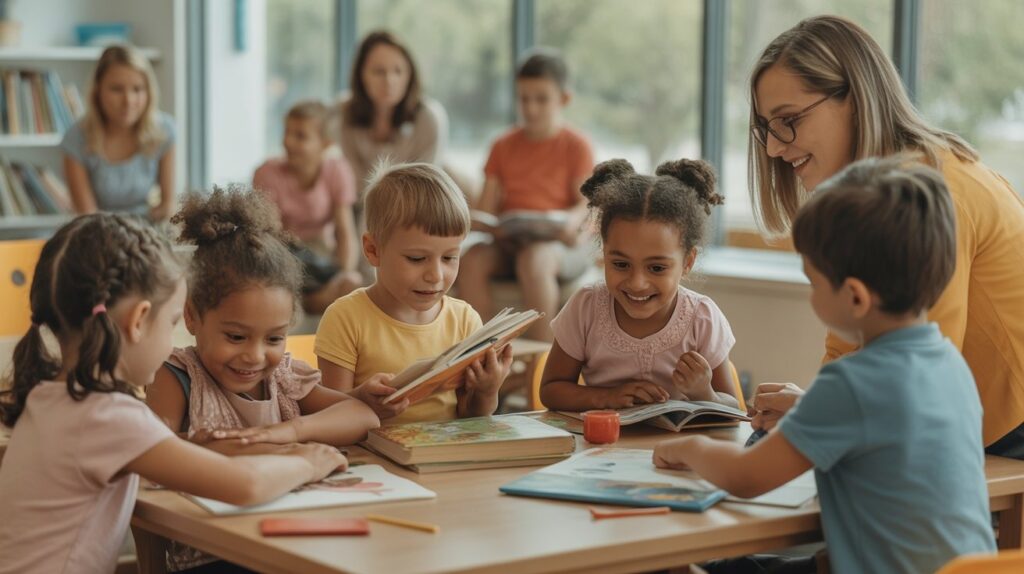
The socialisation question follows homeschooling families everywhere. Grandparents ask it. Neighbours ask about it. The family GP asks for it. And while much of the concern is driven by assumption rather than evidence, it does point to a real and important challenge. Traditional school gives children something that is easy to undervalue until it is removed: daily, unstructured social contact with peers.
Research from the Cambridge Primary Review Trust (2022) found that while homeschooled children often perform academically above average, parents consistently reported social development as their primary concern and biggest logistical challenge. Unlike academic progress, which can be tracked through SAT-style assessments or online testing, social development is harder to measure and harder to plan for.
The social skills children develop in school go well beyond friendship. They include:
• Learning to navigate disagreement and conflict with peers
• Developing patience, turn-taking, and group cooperation
• Building resilience through minor social setbacks and repair
• Experiencing diverse perspectives from children of different backgrounds
• Developing communication confidence in both structured and informal settings
None of these skills require a physical school building. What they require is consistent, structured, and varied contact with other children. Virtual communities can provide that contact in ways that are often more flexible, more diverse, and in some cases more psychologically safe than a conventional classroom environment.
What Are Virtual Communities for Homeschooled Children?
A virtual community for homeschooled children is any organised, online-based space where children interact, collaborate, learn together, or participate in shared activities with other children outside of a traditional school. These communities vary significantly in their structure, purpose, and formality.
The main types include:
• Online co-ops: Groups of homeschooling families who pool resources to deliver shared lessons, projects, and group activities via platforms like Zoom or Google Meet
• Virtual group classes: Tutoring platforms that run small-group sessions where children from different families learn together in real time
• Online clubs and activity groups: Structured activities such as book clubs, coding clubs, debating societies, and art groups run via video
• Social platforms for home educators: Moderated UK-based networks like the Home Education UK Facebook groups, Mumsnethomeed forums, and regional WhatsApp coordination groups
• Extracurricular virtual programmes: Organisations like the National Children’s Orchestra, UK Scouts Online, and online drama schools that run virtual programmes for children outside traditional school
Each of these formats creates different kinds of social interaction. Co-ops and group classes build the closest equivalent to classroom social experience. Clubs provide interest-based connections. Platforms and forums support parents in connecting children more broadly. Extracurricular programmes build social identity through shared pursuit.
How to Socialise Homeschooled Children Through Virtual Communities
The question of how to socialize homeschooled children is answered differently at different ages, but the underlying framework is consistent: create regularity, create variety, and create genuine purpose in every social interaction. Children build friendships and social skills not through one-off encounters but through repeated, purposeful contact over time.
Start with Regular Group Learning Sessions
The most socially rich virtual environment for homeschooled children is a consistent group learning session. When the same 6 to 8 children meet every Tuesday morning for an online science project, social relationships develop naturally over the course of weeks. The shared task gives children something to work on together, which creates the organic social interaction that builds real connection.
For example, James and Lena Whitfield in Norwich began joining a home education co-op in January 2024 for their son Daniel, aged 9. The group met every Wednesday morning via Zoom for a 90-minute session rotating between history, science, and creative writing projects. By March, Daniel had formed a close friendship with two other children in the group and was asking to stay online after sessions ended. According to James, regularity was the key thing, the children needed time to get past being politely engaged and into actually being themselves with each other.
Use Interest-Based Virtual Clubs to Build Identity and Belonging
Children bond fastest around shared interests. A child who loves chess will bond with another chess enthusiast faster than they will bond with a random peer simply because they are the same age. Virtual clubs built around genuine interests accelerate social connection because the shared passion provides an immediate common language.
UK organisations offering virtual clubs that work well for homeschooled children include the RSPB Wildlife Watch groups, National Youth Theatre online workshops, Young Writers clubs, and online debate programmes run by secondary school enrichment providers. For children preparing for GCSE-level work, joining a virtual history debate club or a science Olympiad preparation group provides both intellectual stimulation and genuine peer community.
Interest-based clubs also have a natural advantage for children who find open-ended social situations anxiety-inducing. Having a clear activity removes the pressure to perform socially and allows genuine connection to emerge through the work itself.
Want expert online tutors who support your homeschooling journey? Explore our Benefits of Hiring Online Tutors for Homeschooling to see how one-to-one support fits into your child’s weekly routine.
Build Virtual Learning Social Skills Through Structured Interaction
Online social interaction is not the same as in-person interaction, and children benefit from explicit guidance on how to navigate it well. Virtual learning social skills include things like waiting your turn to speak in a group video call, interpreting tone without non-verbal cues, managing the technical aspects of shared digital work, and knowing how to re-engage after a connection issue or a misunderstanding.
These skills are increasingly relevant. A 2024 report from the UK Education Policy Institute noted that children who are confident in online collaborative settings perform better in university group work and early professional environments. For homeschooled children who may do much of their future learning and working online, developing these skills early is a genuine advantage rather than a compromise.
Parents can support this by talking explicitly with children about the social norms of online spaces, by reviewing recordings of group sessions together to reflect on communication, and by pairing virtual activity with conversations about how interactions made the child feel.
Extracurriculars for Homeschooled Kids: Mixing Online and In-Person

Virtual communities work best when they are part of a broader social plan rather than the only social outlet. The most socially confident homeschooled children in the UK tend to combine regular virtual community participation with in-person extracurriculars for homeschooled kids such as local sports clubs, music groups, Scouts, drama societies, and park meet-up groups organised through local home education networks.
Priya Nair in Leicester homeschools her two children, Rohan (11) and Kavya (8), and has built a weekly social structure that combines both. Rohan attends a virtual GCSE preparation group on Monday mornings, a local athletics club on Wednesday afternoons, and a weekly Minecraft education group online on Fridays. Kavya has a virtual book club every Tuesday and attends a gymnastics class and a home education park group in person each week. Both children, according to Priya, have rich and varied friendships that cut across different contexts.
This blended approach reflects what research from the National Foundation for Educational Research (NFER, 2023) found: homeschooled children who combine virtual and in-person social activities consistently show stronger social confidence and broader peer networks than those who rely on either format alone.
Homeschool Socialisation UK: Building a Practical Weekly Social Plan
The most effective approach to homeschool socialisation UK is one that is planned with the same intention as the academic curriculum. Many parents make the mistake of treating social activity as something that will happen naturally once academics are sorted. But for homeschooled children, social connection requires the same deliberate planning and scheduling as maths or English.
A practical weekly social plan might look like this:
• Monday: Virtual group tutoring session with 6 other homeschooled children (45 to 60 minutes)
• Tuesday: Local sports or arts club (in-person)
• Wednesday: Virtual interest club such as coding, chess, or creative writing (30 to 45 minutes)
• Thursday: Home education park or museum meet-up with local families (in-person)
• Friday: Free online social time with a friend met through the virtual community (unstructured, parent-supervised)
This kind of structure ensures children have at least 5 distinct social touchpoints each week across different formats and contexts. It mirrors the social variety of school life without requiring a school building.
How Online Tutoring Contributes to Social Development in Homeschooled Children
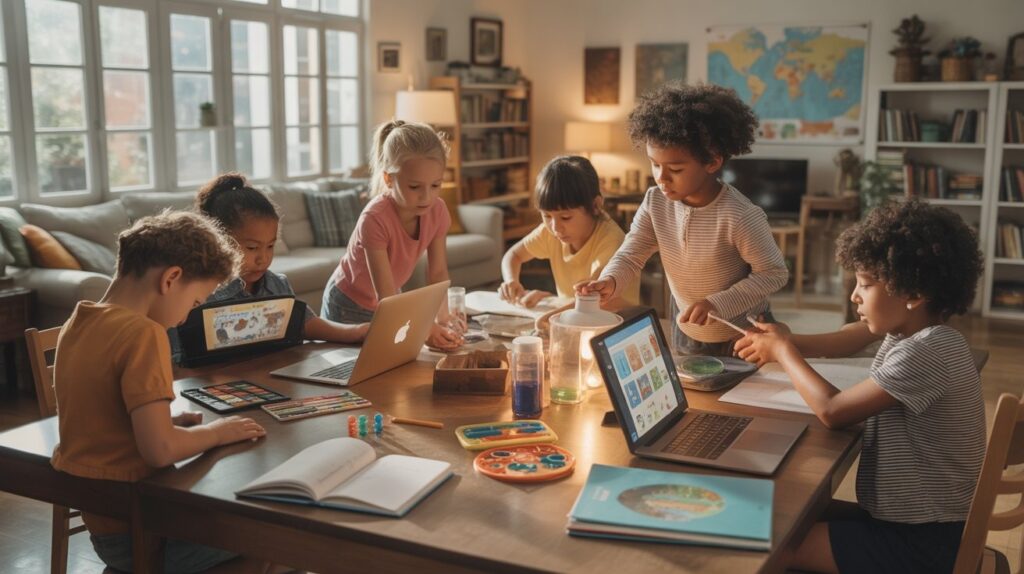
One aspect of homeschooling support online in the UK that often goes unrecognised is the social contribution of a skilled online tutor. A one-to-one tutoring relationship is, in itself, a meaningful social experience for a homeschooled child. It provides a consistent adult relationship outside the family, exposure to different communication styles, and practice in navigating the specific social dynamics of a structured learning conversation.
When tutors run small group sessions rather than purely individual ones, the social dimension becomes even more significant. A child who works weekly with two or three other children on GCSE English Literature analysis is developing both academic and social skills simultaneously. They are practising the art of respectful disagreement, building on another person’s idea, and communicating their own thinking clearly to an audience.
Isabel Thornton in York began using an online tutoring platform for her son Marcus in October 2023 when he was preparing for his SATs. The tutor ran a small group of three Year 6 pupils every Thursday afternoon. Within two months, Marcus, who had been quiet and hesitant in online settings before, was actively contributing to group discussions and had developed a friendly, competitive rapport with the two other children in the group.
Is your homeschooled child ready for their next academic step? Explore online tutors in the UK for homeschoolers and find a tutor who supports both learning and social confidence.
Conclusion
Homeschooling does not mean raising a socially isolated child. It means taking full responsibility for creating the social environment your child needs, which is both a bigger challenge and a richer opportunity than many parents initially expect. Virtual communities, when used thoughtfully alongside in-person activities, can provide homeschooled children with diverse, meaningful, and consistent peer relationships that rival and in some cases exceed what a conventional school environment offers.
Families like Sophie and Amelia in Bristol, James and Daniel in Norwich, Priya, Rohan, and Kavya in Leicester, and Isabel and Marcus in York are not exceptions. They are part of a growing community of UK families who have discovered that intentional, structured homeschool socialisation UK through virtual and blended communities produces children who are socially confident, broadly connected, and well prepared for the next stages of education and life.
At YourTutor365, we understand that homeschooling families need more than academic content delivery. They need homeschooling support online in the UK that recognises the whole child. Our tutors work with homeschooled children across primary school, SATs preparation, and GCSE level in both one-to-one and small group formats, supporting academic progress and social confidence in equal measure. Book a free assessment today at yourtutor365.com and take the first step toward a richer learning and social environment for your child.
FAQs
1. How do homeschooled children socialise without going to school?
Homeschooled children socialise through virtual co-ops, online clubs, group tutoring sessions, local sports and arts activities, and home education community meet-ups, all of which can provide regular and varied peer interaction.
2. Are virtual communities effective for homeschool socialisation in the UK?
Yes, UK research from NFER (2023) found that homeschooled children who participate in virtual and blended social communities consistently show strong social confidence and broad peer networks comparable to those of traditionally schooled children.
3. What extracurriculars are available for homeschooled kids in the UK?
UK homeschooled children can access in-person clubs like Scouts, sports teams, and music groups, as well as virtual options including Young Writers clubs, online drama workshops, National Youth Theatre online programmes, and coding and chess clubs.
4. How can online tutoring support social development in homeschooled children?
Online tutoring, especially in small group formats, gives homeschooled children a structured social context where they practise communication, respectful discussion, and collaborative thinking alongside academic learning.
5. How many social activities should a homeschooled child have each week?
Most homeschooling educators recommend at least 4 to 5 distinct social touchpoints per week across a mix of virtual and in-person formats to ensure the social variety that supports healthy development.
