
In 2026, school isn’t like it used to be, even a short while earlier. Because tech moves fast now, and nearly everyone can get online, ways of studying keep shifting globally. The debate around Online Classes vs. Traditional Tuition has become more relevant than ever, especially for parents and learners trying to choose the most effective path. This talk matters a lot these days, particularly for families and those picking how to learn. One system adjusts quickly, while the other sticks to a fixed path – each shapes learning in its own way. Knowing how they’re not alike gives learners clearer choices when picking what fits their needs right now.
The Evolving Nature of Education by 2027
Now, classrooms look nothing like they did when chalk dust filled the air. By 2027, young learners juggle tablets, laptops, and apps without missing a beat. Instead of being tied to desks, lessons follow them wherever there’s a signal. Schools and tutors alike scramble to adjust as digital options grow sharper each month. Virtual setups serve up quizzes that respond instantly, videos you can pause mid-explanation, plus live help whenever confusion strikes. Yet some still stick with paper notes, scheduled drills, and teachers watching every move from across the room. People now talk more about online classes compared to regular tutoring because each tries hard to keep up.

Online Classes Now
Home study isn’t just a stopgap anymore – it’s how many now learn every day. Through services like YourTutor365, learners connect with skilled teachers, tailored sessions, and pick times that fit their lives. By 2026, digital classrooms run on smart tech: quizzes shaped by artificial intelligence, real-time feedback systems, shared screens for drawing ideas together. Pacing stays personal, though help remains close at hand when needed.
Imagine logging into a classroom from anywhere. People scattered across distant regions reach skilled teachers effortlessly through online learning. Because locations do not block entry, minds meet beyond borders. Wider circles mean deeper insight grows naturally alongside fresh viewpoints on what’s being studied.
What Traditional Tuition Provides
School-based teaching still holds strong in places that see face-to-face lessons as key to building focus and routine. Being there in person means students stick to set times, go to real classrooms, while engaging with instructors and classmates up close. Some find it easier to stay on track when they are actually present, surrounded by others doing the same thing.
When teachers work face to face, they notice how students sit, react, or look puzzled – then clear things up on the spot. Being there every day helps them build trust over time. Some families still prefer school desks because routines feel steadier that way. This traditional setting also encourages social skills, teamwork, and healthy competition, which many believe play an important role in shaping a student’s overall personality and learning discipline.
Flexibility Versus Time Management
One of the most noticeable differences in Online Classes vs. Traditional Tuition is flexibility. Picking when to learn becomes possible, matching each student’s day-to-day life. Because lessons get recorded, going over material happens whenever it suits best. This helps those balancing homework, tests, and after-school commitments. Take YourTutor365 – custom schedules and private sessions show how deeply flexibility matters there.
Fixed class hours define traditional learning. For certain students, structure builds consistency – yet others struggle when work or travel fills their days. By 2026, saving time matters more than before. That shift pushes many toward virtual classrooms instead.
Adjusting Speed and Tailoring Learning
Learning online by 2026 centers on tailoring lessons to each student. When a topic clicks quickly, progress speeds up – tougher parts get extra attention instead. Behind the scenes, smart data shows teachers exactly where learners struggle, shaping how lessons unfold. Because of this fit-to-measure style, plenty of parents now see digital classrooms as their go-to choice.
Most classrooms move at the same speed for everyone. Even when instructors answer questions, there is never enough time to cover every need. Some learners stay quiet around classmates, holding back confusion. Private online lessons make space for those voices to come through.
Cost and Value for Money
Picking how you learn means thinking about money. Since there is no need to commute, digital courses usually cost less. Materials online are rarely printed, which saves cash over time. Some websites charge a flat fee for endless topics instead of per class. Buildings take up space and funds – online skips both entirely.
Spending more on regular classes usually covers room upkeep, where it’s held, and travel needs. Still, certain families see that price as buying structure and close guidance. When comparison of Online Classes vs. Traditional Tuition, digital lessons tend to offer stronger returns by 2026.
Student Involvement and Communication
Back then, people often said online learning felt flat. By 2026, that’s changed a lot. Quizzes you click through, instant voting, games mixed into lessons, plus chat boxes buzzing – these pull students in. Teachers using sites such as YourTutor365 learn ways to spark attention, keeping things moving. Energy stays high when interaction drives the room.
Being there in person helps learners talk and work together the way school has always done. A room full of people trying their best might push someone to try harder, too. Still, when too many show up, it gets hard to really connect – something smaller digital sessions handle better. One student talking with a teacher online often finds more space to speak.
Technology and Learning Tools
Nowhere is change clearer than in today’s classrooms, where tech shapes nearly every lesson. Digital setups like interactive screens, artificial intelligence helpers, quick grading software, plus shared online libraries power most virtual sessions. Learning feels sharper, more organized, even shaped by real numbers and patterns. Pupils move through material at their own pace, jump back into old topics, then pull up extra help without delays.
Old-school teaching sticks mostly to books and talking. Some schools now use high-tech rooms, yet changes come more slowly than what you see online. By 2026, digital tools tilt the balance firmly toward web-based lessons. This shift means students not only absorb knowledge faster but also develop skills in tech literacy and self-directed learning that traditional methods struggle to provide.
Parental Involvement and Monitoring
Families now expect to see what happens inside classrooms. With digital tools, updates come through visual summaries, daily logs, schoolwork insights, and comments from teachers. No need for repeated trips to the building when info arrives at home. One service making this possible shares student growth records along with notes from instructors, giving caregivers solid ground to support learning.
Now here’s something – parents often wait for tutor reports or chat now and then to track progress. That human touch helps, yet it misses the constant flow of precise info found in digital tools. This gap in regular visibility often leaves parents reacting late to learning issues, whereas real-time digital tracking allows quicker support and more informed decisions for a child’s academic growth.
Discipline and Learning Environment
What keeps many learners on track? The routine is built into regular classes. Sitting in a room where everyone follows the same pace cuts down on wandering attention. When staying focused feels hard, having clear rules helps more than expected.
Staring at a screen does not mean learning happens automatically. By 2026, clearer routines, live-style lessons, and check-in features for caregivers helped kids stay on task more often. With steady support nearby, young learners began managing their time better even without classrooms around. Additionally, interactive assignments, instant feedback, and scheduled breaks in online setups reinforce discipline, ensuring students remain engaged and accountable throughout their learning sessions.
Who Leads by 2026?
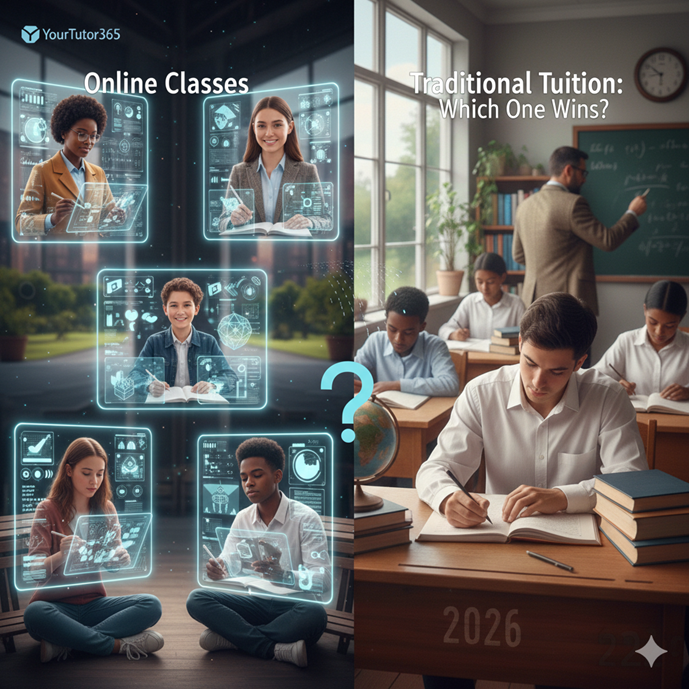
The answer to Online Classes vs. Traditional Tuition depends largely on how a student learns, what they need day to day. By 2026, digital lessons pulled ahead by fitting into varied schedules, adapting to unique learners, costing less, and using tools smartly. Take YourTutor365 – this kind of platform proves remote teaching can match personal goals with strong results.
Even when some students do well sitting in actual rooms with set schedules, that setup isn’t always practical anymore. Because rigid timing and fixed spaces can slow things down, older teaching methods struggle to keep up these days.
By 2026, studying online will take the lead for many learners – not because it’s perfect, but because it fits better into real lives. Flexibility shows up in how lessons adapt to individual needs, something classroom teaching often can’t keep pace with. Even so, old-school tutoring still holds value here and there. Yet momentum clearly shifts toward screens, signals pointing at tech-driven growth. Help comes through services like YourTutor365, guiding users without clutter or confusion. Learning becomes simpler to reach, easier to manage, quicker to apply – just different enough to matter.
